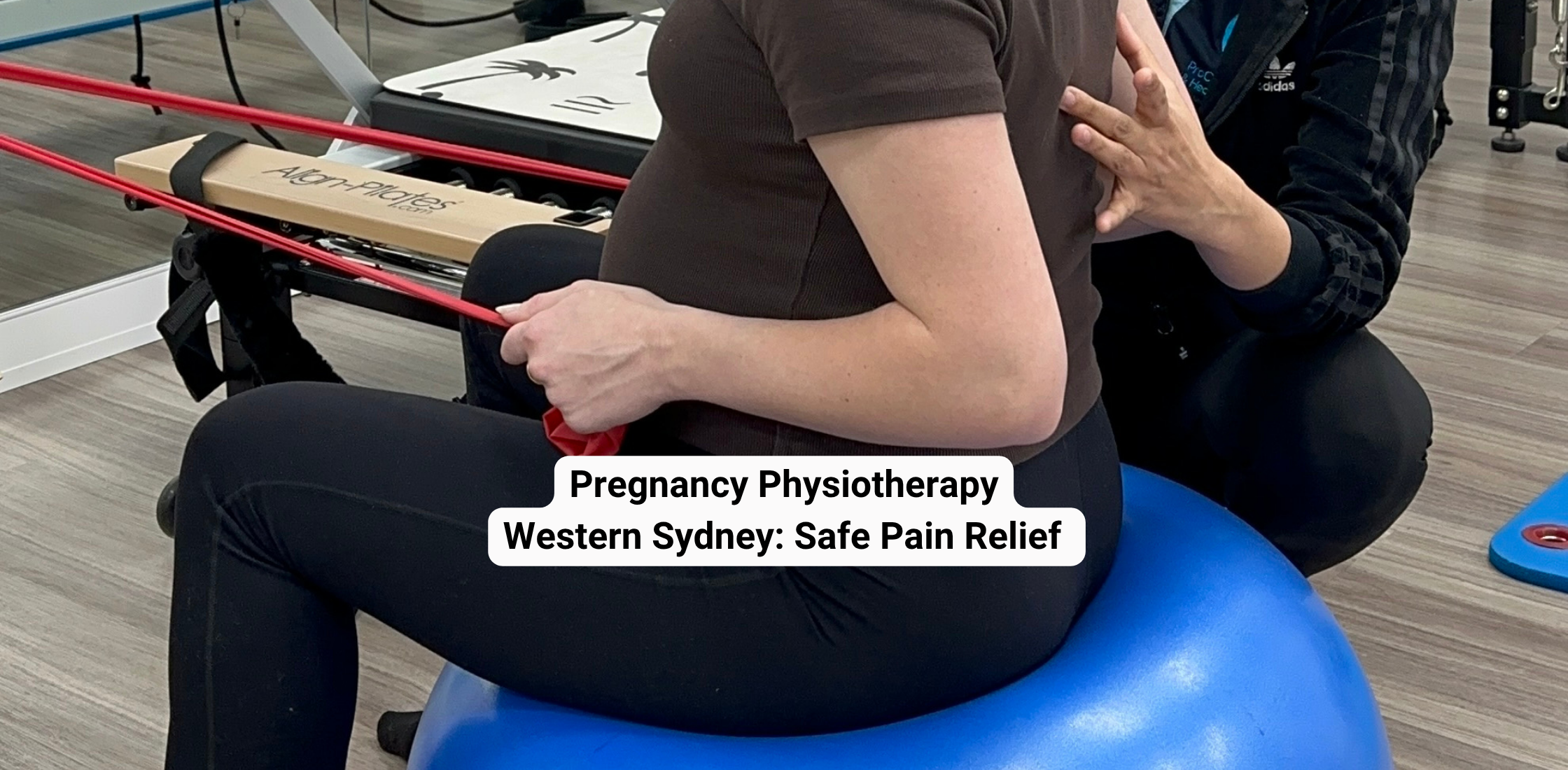

Absolutely! Prenatal physiotherapy can definitely help you prevent lower back or pelvic girdle pain during pregnancy.
Prenatal, also known as antenatal physiotherapy, primarily aims at supporting you throughout your pregnancy. Sessions are spaced throughout the pregnancy to educate you about the changes your body will undergo during different trimesters and guide you in preparing your body to cope with those changes so you can thoroughly enjoy your pregnancy.
Women’s health physiotherapists are trained to assess your baseline in case you fall into a high-risk pregnancy and plan your pregnancy care accordingly. They can educate and train you in the correct way to do pelvic floor muscle training and create an exercise program for you, keeping in mind your specific needs and limitations.
It helps keep you active and strong throughout your pregnancy and also sets your body up for effective postnatal care.
Early introduction to pelvic floor muscle training and core engagement can prevent lower back or pelvic girdle pain. Early intervention to offload the lower back and SIJ with taping or other supports like a brace or compression garments can be very useful.
Anyhow, if you have missed that session and now you are finding it difficult to walk, sit to stand, or roll in bed, no problem – your women’s health physiotherapist is trained to support you and keep you pain-free and mobile throughout your pregnancy so that you can enjoy your pregnancy. With the right kind of support and exercises, your women’s health physio can prepare you for the initial motherhood journey and make you stronger so that you can make your motherhood journey a memorable one.
So, why do some women get low back pain, SIJ, or Pelvic Girdle Pain in Pregnancy, while some do not at all?
Your body is doing some remarkable things to grow and support a new life within you. In order to create more space for the growing bub, your pregnancy hormones play a very important role, leading to relaxation of the ligaments, which ideally support our joints like hinges. In some females connective tissue stretches a lot more than usual due to variation in genetic makeup, thereby they have less support at joints from ligaments, and their muscles have to work really hard to provide support, leading to tight bands or knots in the lower back, buttocks, and ITB or more load at discs, which can result in referred pain to the leg.
So basically, it is a varied connective tissue response to your pregnancy hormones, making ligaments lax and making it hard to provide the much-needed support for joints with increasing load. As pregnancy progresses from the second trimester to the third trimester, the load on these structures increases, and you start feeling more pain and difficulty in mobilizing freely.
During vaginal delivery, this ligament laxity allows us to give birth naturally, allowing tissues to stretch without tearing and minimal injury.
How Does Physio Actually Help, Though?
Lower back pain during pregnancy can be a common problem; however, it’s important to differentiate whether the pain is coming from the lower back or the SIJ joint, since physiotherapy management would vary in both scenarios. Sometimes, there could be an overlap between these two presentations – lower back pain or pelvic girdle pain syndrome. You can also get a referred pain going either to your thigh or your whole leg. If the pain radiates down to your legs, it is most likely due to an increased load on your lower back and is commonly referred to as sciatica.
Coming back to how physio can help. The first and foremost point is to differentiate the source of pain – lower back, SI joint, pubic symphysis, pelvic girdle syndrome, or a mixed presentation.
Based on your presentation, your therapist can do safe manual therapy and prescribe safe exercises along with recommendations for a brace, taping, or pressure garments to create some force closure on your joints.
It’s crucial to seek help at the right time so that you can enjoy your pregnancy smoothly and you can continue to do your day-to-day activities without pain and without limiting your mobility.
The Procure Physio Prenatal Approach
We understand the fact that every pregnancy comes with different challenges. That’s why we focus on evidence-based physiotherapy methods. And we make sure we support you in your journey with utmost care and respect.
Initial Assessment: Our women’s health physio consults are 45 minutes to an hour long so that we have enough time to listen to your needs, assess you thoroughly, educate and treat you, and send you home with a treatment plan that works for you.
Your treatment is tailored to your needs; it might include:
Gentle Hands-On Therapy: It includes techniques to release your tight muscles and get things moving better. Our therapists are equipped with special bed extensions where you can lie on your tummy for treatment if you are comfortable.
Safe Movement Guidance: We will teach you how to work with your changing body functions and needs – How to get in and out of bed, sit at work without your back seizing up. How to sleep without tossing and turning all night.
Prenatal Exercise Prescription: Physio will introduce you to breath work, pelvic floor muscle training, and core strengthening in order to guide you to safely increase your exercise tolerance based on your goals.
Our therapists are trained to measure and prescribe you the supports you might need during pregnancy – belts, garments, tapes, braces, etc.
We also support women with high-risk pregnancies, twins, or previous birth trauma — always consult with your GP, midwives, and/or obstetrician.
Gradually, we move the patients to our physio-led small group classes and progress their exercises safely.
If you are unsure of when is the right time to see a prenatal women’s health physio is, you can always call us and seek some guidance from our team, who are happy to help you make the decision.
Here are a few commonly asked questions when it comes to prenatal physio.
Are Kegels one fit for all ?
Kegel is a great exercise; it has its own place in pelvic floor rehab. However, it’s not a solution for every pelvic floor-related issue. In my personal experience, it’s always beneficial to see a women’s health physio and understand the pelvic floor first, and learn to do it properly.
Is it ok to live with pain in pregnancy?
Nooooooo……. It’s sad to hear that we are still made to accept that it’s normal to have pains and aches, leaking in pregnancy, and women are told to hang in there till they deliver the bub.
There is a lot of support available. Please reach out to a women’s health physio so that you can enjoy being pregnant.
Here’s What You Need to Know
Being in pain is not a sign of weakness. You’re not being dramatic either. Growing a human is hard work, and your body is doing something incredible. But that doesn’t mean you have to suffer.
Working with pregnant women for years, the number of times you hear “thought you just had to deal with it” is heartbreaking. No, you don’t.
Prenatal physio is not just about getting rid of pain, even though that’s the main element of your treatment journey. It’s about preparing yourself for what’s coming, making you feel confident with the changes, and believing that someone does understand what you are going through.
If you’re tired of being in pain, or if you’re helping someone navigate pregnancy, our Women’s Health Physiotherapist at ProCure Physio will figure out what’s going on and make a plan that works for you. Because you deserve to enjoy your pregnancy.
Here’s a bonus for you. We have thoughtfully prepared a detailed pregnancy planner for you so that you can focus on what matters the most.